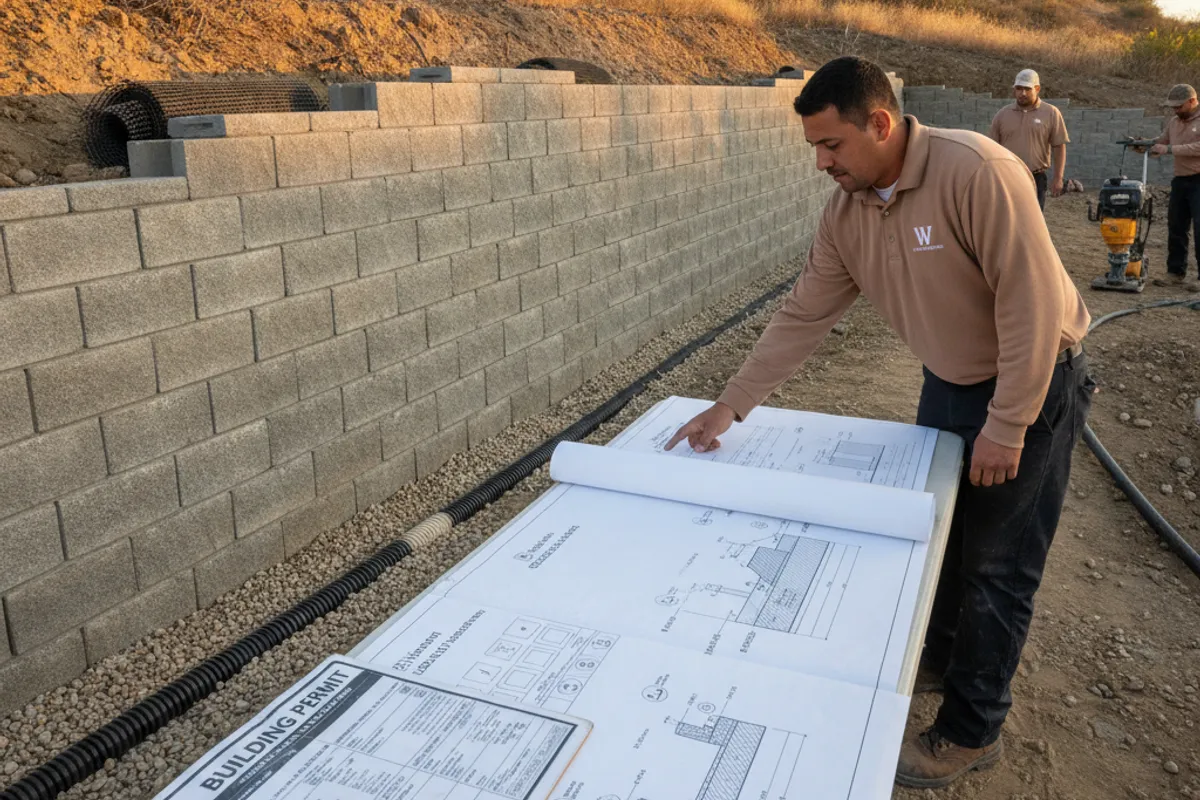
The three-foot rule in the City of San Diego, and why the number you have heard is wrong
If you have read that the threshold is four feet, that number came from the model building code, and the City of San Diego does not use it. City of San Diego Information Bulletin 220 (October 2024) is the operative document, and it says a retaining wall requires a building permit when the wall is over three feet in height, measured from the top of the footing to the highest point on the wall.
That is a foot lower than the figure in wide circulation, which means a wall a lot of homeowners assume is exempt is not. Building without a required permit can become a disclosure and inspection problem later. Confirm the path with the department that actually reviews the address.
The measurement point matters as much as the number. It runs from the top of the footing, not from the dirt you are standing on. A wall that looks like it is under three feet from the yard side can measure over three feet once the footing is included.
Unincorporated county areas run on a different rule, not a lower version of the same one. The County’s exemption requires several conditions to hold at once: no more than three feet of retained soil measured from the top of the footing to the top of the retained soil, no more than six feet of total height from the lowest finished grade, level backfill, no other structure within six feet, no surcharge, and nothing impounding flammable liquids. Miss any one of those and the wall needs a permit.
The other cities in the county each set their own rules, and we are not going to guess at them here. Call the building department for the city your address sits in, or County Planning & Development Services if you are in an unincorporated area, and confirm before anyone breaks ground. Our city pages name which of the three authorities governs each of the 67 communities we cover, so start there if you are not sure which one is yours.
Height is only one of the triggers
In the City of San Diego, height is one of five independent conditions in IB 220. Any one of them requires a permit on its own, including on a wall well under three feet:
A slope behind the wall. A wall supporting sloping backfill steeper than 1.5 horizontal to 1 vertical requires a permit whatever its height.
Surcharge loads. Weight bearing above the wall is called surcharge, and IB 220 names driveways, walkways, structure footings and fences as examples. Any of them triggers a permit regardless of wall height.
Tiered walls. Stacked or terraced walls are measured together. A permit is required when the height from the bottom-tier wall’s top of footing to the top of the top-tier wall is greater than six feet, or when the footing of any tier crosses the slope stability plane of a lower tier. The bulletin assumes those planes project upward from the bottom edge of each footing’s heel at 2 horizontal to 1 vertical.
Impounding flammable liquids. Rare on a residential lot, but it is on the list.
A wall that needs a permit because of sloping backfill, surcharge, or flammable liquids is also not eligible to use the City’s standard retaining wall designs from Information Bulletin 221, so it needs its own engineered drawings. The tiered-wall trigger is a separate permit question. Confirm with Development Services whether that wall can still use a standard drawing.
What the engineering process looks like
When an engineer is required, the work is a stamped design for that lot, not a county-wide recipe.
A California-licensed civil engineer, structural engineer, or architect produces the drawings the bulletin requires when the wall sits outside the City’s standard masonry path. A geotechnical investigation may also be required based on location. Those documents go to the building department with the permit application. We do not publish a San Diego plan-check calendar or a typical inspection count for every wall type. Ask the department which visits apply to that permit. Bulletin 220 sends inspections to the City’s inspection list (Information Bulletin 120). Bulletin 221’s masonry visits apply to those grouted standard designs, not as a default for every SRW.
Engineering and permitting both add cost before any block is placed. We are not going to publish a figure for either one: the City’s permit fees live in its own fee schedule and they change, and we have not found a public source that publishes engineering fees for this work. Ask your crew for the current numbers for your jurisdiction, and ask the building department directly for the permit fee.
What unpermitted walls mean later
An unpermitted wall can show up when someone later asks for records. Ask the department that reviews the address whether a legalization path exists for that wall, and what drawings or exposure they would need. We do not publish a California sale-price, lender, or liability outcome from this page.
Doing the required permit work the first time avoids reconstructing that path later.
Walls under the threshold: permits still make sense in some cases
A wall under the City’s three-foot trigger, with none of the other four IB 220 conditions, does not require a City permit. Confirm that on a section drawing, not from the exposed face.
A permit still documents what was built. If failure would hit a structure or a public area, that record can matter even when IB 220 does not require the permit. Confirm the path with Development Services. Do not treat surcharge, steep backfill, flammable liquids, or the tiered-wall trigger as optional. Those are permit conditions, not extras.
Wall Pro SD connects San Diego homeowners with licensed local contractors who understand local permit requirements and can handle the engineering coordination. Call (858) 400-4639 to get started.
For permitted wall projects, see our concrete block retaining walls and commercial retaining walls service pages.