Read the two public documents that currently sit at the top of this search: City of San Diego Information Bulletin 220 and the County’s PDS 083 retaining wall handout. Those PDFs are the rules. This page is how homeowners usually misread them, especially the three-foot City trigger measured from the top of the footing.
Why codes matter before you build
Retaining wall codes in San Diego are not optional guidelines. They determine where a wall can be placed on your lot, how tall it can be before engineering is required, and how close it can be to property lines, easements, and structures. Building a wall outside these rules creates issues at sale, can require demolition and rebuild, and in the case of a failure, affects your liability exposure.
The rules come from two places: the California Building Code (CBC) as adopted and modified locally, and jurisdiction-specific development standards for hillside lots. Because San Diego County contains dozens of incorporated cities plus unincorporated county land, the specific rules vary somewhat by location. What applies in the City of San Diego may differ from Chula Vista, El Cajon, or La Mesa.
The information below describes the general framework. For the rules specific to your parcel, verify with the building department for your city or the County of San Diego for unincorporated areas.
Height limits and the permit threshold
In the City of San Diego, Information Bulletin 220 requires a building permit once a retaining wall is over three feet in height, measured from the top of the footing to the highest point on the wall. The four-foot figure in wide circulation is a model-code number the City does not use, so treat three feet as the number that matters here. Unincorporated county areas apply a separate multi-condition test, and each other city in the county sets its own trigger.
The measurement catches more walls than homeowners expect, because it starts at the top of the footing rather than at the dirt you are standing on. A wall that looks like it is under three feet from the uphill side can measure over three feet once the footing is included.
A wall under the local trigger, with no surcharge above it and no steep slope behind it, may not need a permit, but it is still subject to setback requirements and development standards. No permit does not mean no rules.
Setback requirements from property lines
Setbacks are set by the zoning for your specific lot, and they are not something to take from an article. What follows is the shape of the rules so you know what to ask about, not the numbers for your property. Ask your building department for the figures that apply to your zone.
Front yard setbacks. Front yards usually carry a lower height limit than side and rear yards, and a wall above that limit may have to sit back from the property line or go through design review. The limit itself is zone-specific.
Side and rear yard setbacks. Walls near side and rear property lines are generally required to set back, and the required distance often scales with wall height. Confirm the ratio for your zone rather than assuming one.
Slopes and top-of-slope setbacks. San Diego’s hillside development standards often include requirements for structures to set back from the top of a natural or graded slope. These setbacks protect slope stability by keeping heavy structures from loading the edge of a slope.
Tiered walls and how they are treated
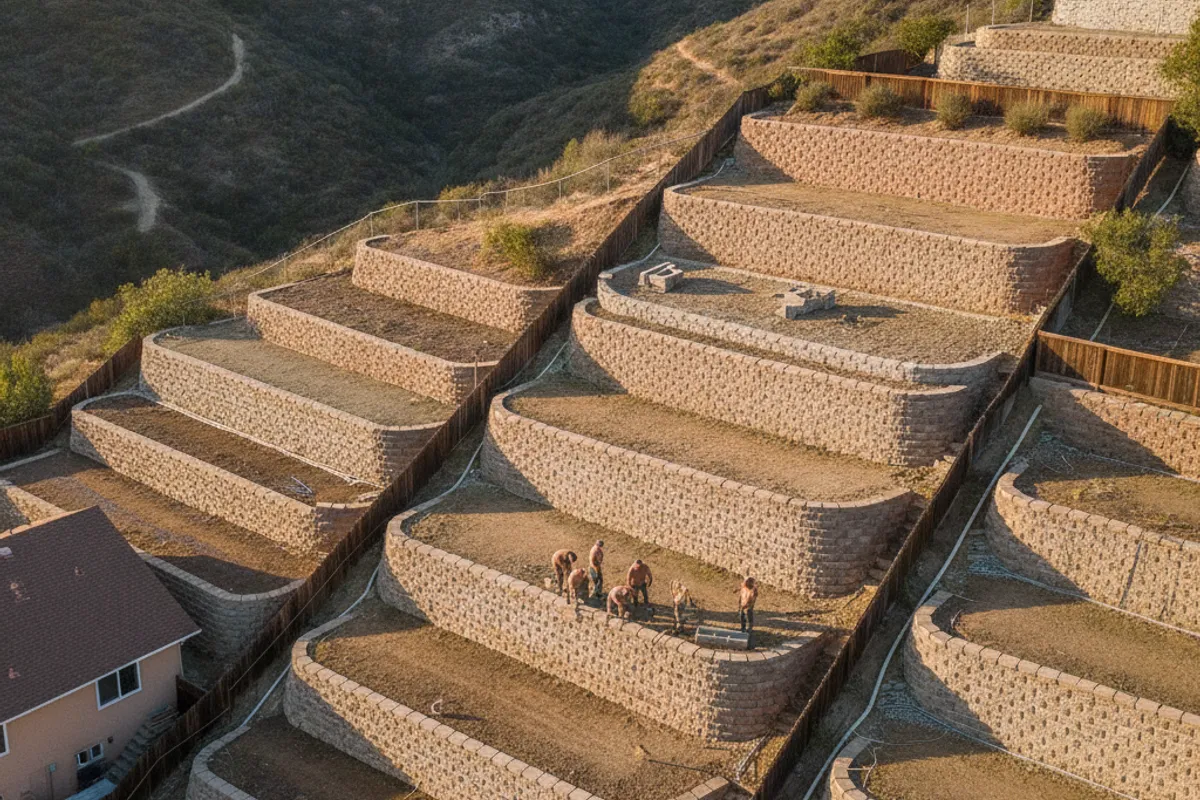
A common approach to managing tall grade changes is to build two or more shorter walls in tiers, with a flat bench between them. This can be a legitimate engineering approach, but the City of San Diego treats tiered walls as a single structure for height and permit purposes when the tiers sit too close together.
Tiering is not a way around a permit. In the City of San Diego a permit is required once the height from the bottom tier’s top of footing to the top of the highest tier exceeds six feet, or when any tier’s footing crosses the slope stability plane of the tier below, which the City projects upward from the bottom edge of each footing’s heel at 2 horizontal to 1 vertical. Verify your layout with the building department before the design is finalized.
Hillside development overlay standards
The City of San Diego and many county jurisdictions have hillside development regulations that go beyond the basic permit threshold. These standards apply in areas with significant natural slopes and may require:
A grading plan reviewed by a civil or geotechnical engineer for any significant cut or fill, even if individual walls are under the permit threshold.
Slope face preservation standards that limit how much of a natural slope can be disturbed or replaced with a manufactured wall face.
Biological resource buffers near canyon edges, riparian areas, and sensitive habitat. In many San Diego hillside neighborhoods, the rear lot line is close to a canyon or open space preserve, and development within certain setbacks of those resources is restricted or prohibited.
If your property is in a hillside development area or within a viewshed overlay, confirm what applies before designing a wall project.
HOA rules on top of building codes
Many hillside neighborhoods in San Diego are within HOA boundaries. HOAs may have architectural standards that are more restrictive than municipal codes: limits on wall height visible from the street, required materials or finishes, requirements for landscape screening, or approval processes for any new wall construction.
HOA approval is required separately from the building permit. Getting a permit does not substitute for HOA approval, and getting HOA approval does not mean the project meets code. Both processes may need to run concurrently on a permitted project.
Getting clear on what applies to your lot
The most reliable approach is a pre-application meeting or phone call with the local building department before design begins. Most departments will confirm the permit threshold, the setback requirements for your zone, and whether your lot falls under any hillside overlay standards. This takes a few days and saves significant time if the answer requires redesigning the project.
Wall Pro SD connects San Diego homeowners with licensed local retaining wall contractors who are familiar with local permit requirements across the county. Call (858) 400-4639 to get connected with a contractor who can help you understand what a wall project on your lot requires.
For walls that need permits and engineering, see our concrete block retaining walls and Allan Block systems service pages.