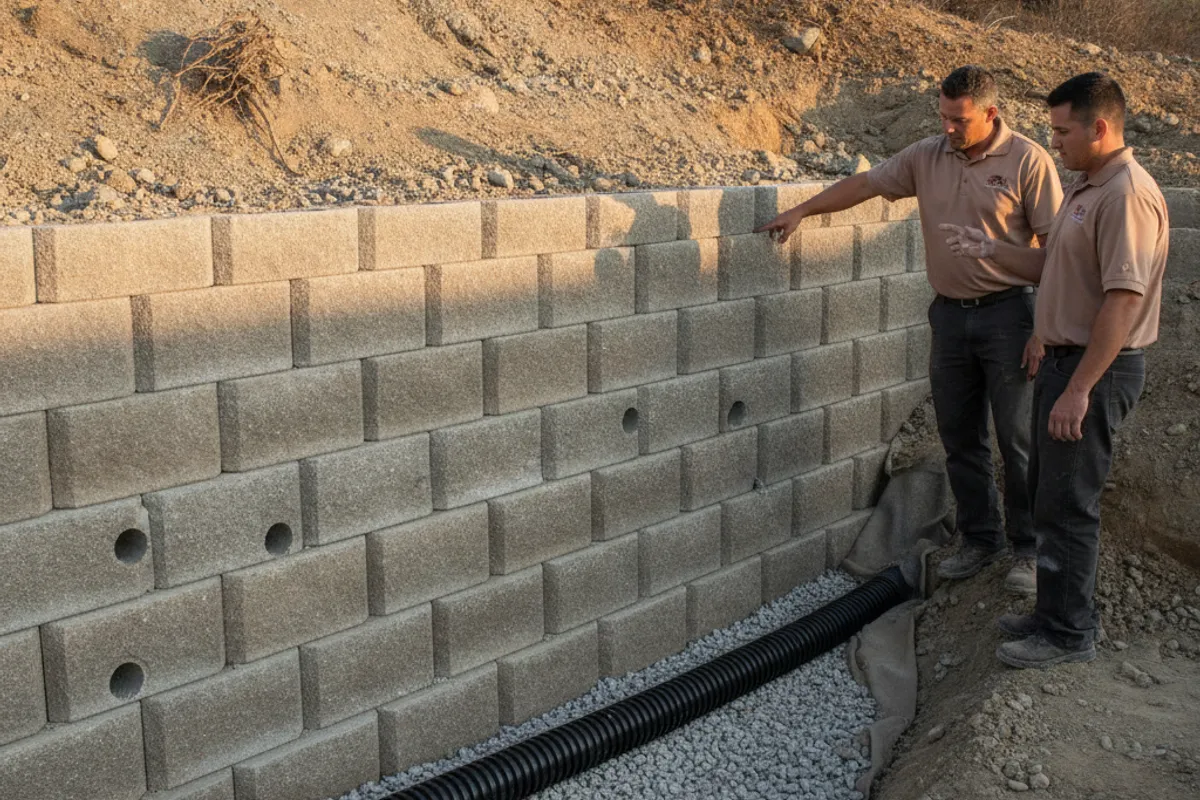
Drainage is a designed part of the wall, not an add-on
Saturated soil behind a retaining wall can exert hydrostatic pressure. Water that cannot leave that soil has to go somewhere. If it cannot move through a drainage layer and out of the wall, that pressure can bulge, crack, or lean the face even when the block still looks new.
How-to pages that rank for this topic name the same parts a homeowner can ask about: free-draining gravel, a perforated pipe at the base, and an outlet that actually discharges. Those are not a universal recipe for every wall on every lot. They are a useful bid checklist.
Inside City of San Diego limits, Information Bulletin 221 is specific for the City’s standard cantilevered masonry designs. The City’s published 221 URL uses a misspelled folder (information-bulletain); ask Development Services for the current bulletin. Those designs cover walls no higher than six feet, with the bulletin’s soil, surcharge, and geologic limits. The City’s standard design calls for wall drainage along the length of the wall: a perforated drain pipe at least four inches in diameter, protected with a filter-fabric sock. The pipe must discharge or connect to a stormwater collection system. Discharge onto an adjoining property is prohibited.
The same bulletin calls for a 12-inch-wide gravel layer directly behind the wall, from the top of the footing to 12 inches below finished grade on the upper side. The rest of the backfill is specified as sandy or gravelly soil in the classifications the bulletin lists. An engineered wall, a segmental wall, or a wall outside City limits can specify a different assembly. Ask which drawing governs the bid.
Information Bulletin 220 also requires the site plan to show site and wall drainage arranged to discharge to a stormwater collection system, or another means that keeps stormwater from flowing onto adjoining properties. The footing and drainage system must sit on the property owned by the permit applicant.
What to confirm on a written scope
Ask where the pipe outlets. The City’s standard design does not allow that outlet onto a neighbor. If the lot has no stormwater connection, the proposal should name the approved discharge method for that jurisdiction.
Ask whether drainage is in the base price. Some bids list rock, pipe, fabric, and outlet work as extras.
Ask which inspection sequence applies. For the City’s standard masonry process, a backfill and drainage inspection happens after grouting and after wall drains are in place, and before earth backfill covers the work. Once soil is placed, those parts are no longer visible.
Signs that water is moving through an existing wall
White mineral staining on a block or concrete face (efflorescence) means water has moved through the material and left deposits as it evaporated. It is evidence of moisture movement, not a diagnosis of the whole wall.
A new outward lean, horizontal cracking, or soil piled against the face that buries weeps or outlets is a reason to have a licensed local contractor look at drainage and structure together. Do not treat those signs as a guaranteed cause. Repair versus replacement is covered in our repair vs. replacement guide.
How we can help
Wall Pro SD connects San Diego homeowners with licensed local retaining wall crews. Confirm drainage, outlet, and inspection language in the written scope before you sign. Call (858) 400-4639 to get connected.
For existing drainage problems, see drainage solutions for retaining walls and emergency retaining wall repair.